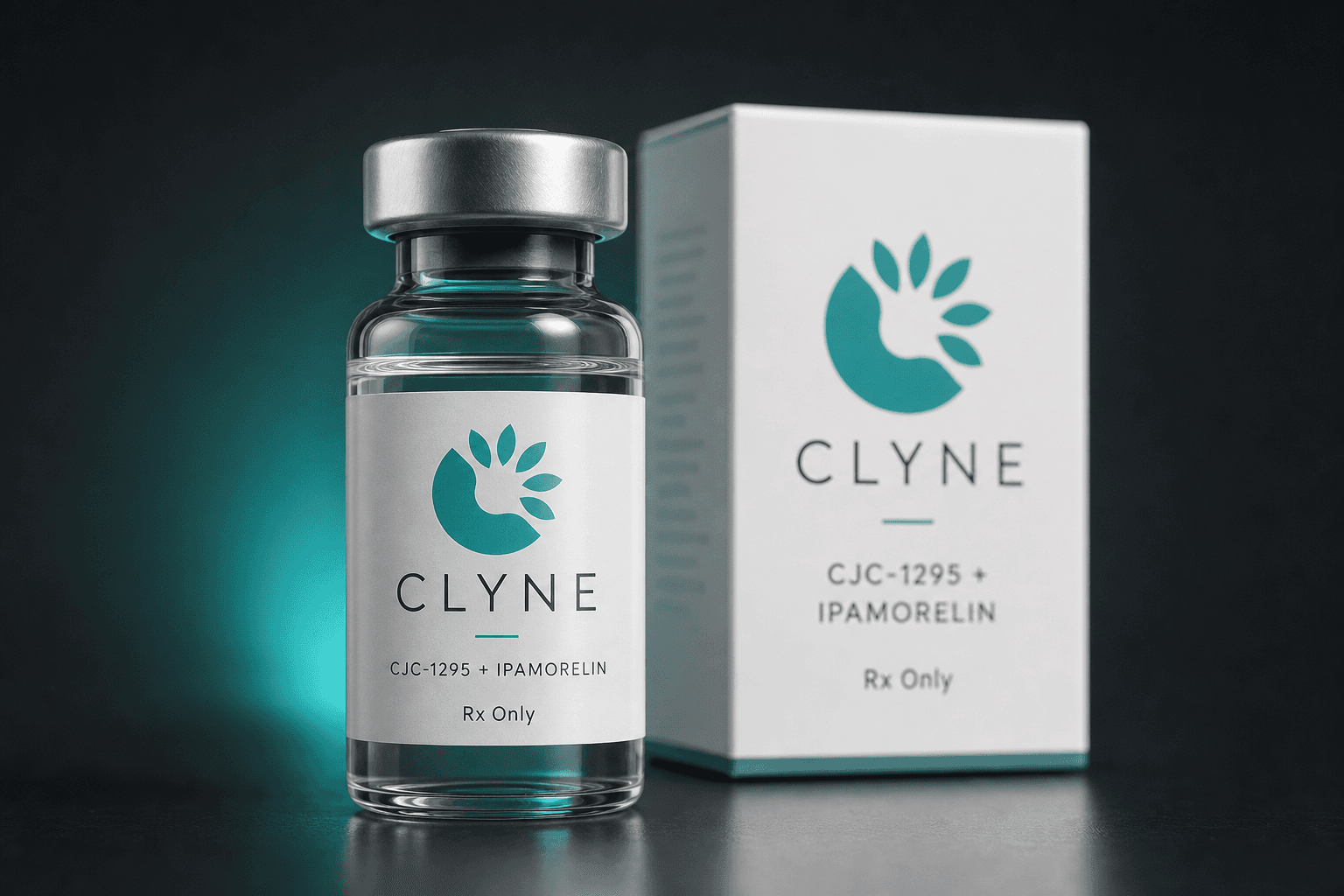
CJC-1295 + Ipamorelin
A combined GHRH (CJC-1295) and GHRP (Ipamorelin) formulation. Prescription-only, physician-reviewed; structure/function framing only.
- Routesubcutaneous injection
- Baseline labsTypically required
- EvidenceLimited human data
- AvailabilityAvailable with Rx
How it works
This is a combined formulation of two peptides that hit the growth-hormone system from two different angles. CJC-1295 is a GHRH analog — like sermorelin, it tells the pituitary to release growth hormone, but it's modified to last longer in the body. Ipamorelin is a growth-hormone secretagogue that works through a separate receptor (the ghrelin/GH-secretagogue receptor) and is considered relatively selective, meaning it nudges GH release without strongly stirring up other hormones like cortisol or prolactin.
The rationale for pairing them is that they act on complementary parts of the same pathway — one pushing on the GHRH side, the other on the secretagogue side — and are prescribed together as a single compounded preparation. That combination logic is mechanistically reasonable, but it's worth being clear-eyed: controlled human data on the specific blend is limited, and a sensible mechanism is a starting hypothesis, not a guarantee of results.
What it's been studied for
- Combined effects on growth-hormone signaling via two receptors
- Markers associated with recovery, sleep, and body composition
“Studied for” describes what research has examined — not a promise of any outcome for you.
What the evidence says
Human data for this peptide is limited. A licensed provider can discuss what the current evidence does and does not support for you.
What to expect at Clyne®
Prescription-only and physician-reviewed. As a compounded preparation, it is not FDA-approved. A provider typically reviews your intake and may order baseline labs (such as IGF-1) before prescribing, with follow-up labs to guide care.
Your provider directs route and schedule; we don't publish dosing protocols. The relationship is meant to be ongoing — your care team stays reachable for questions and adjustments.
Safety & considerations
Your provider screens your history and medications and can decline if GH-axis therapy isn't appropriate — a history of cancer or active malignancy is particularly important to disclose. Tell your provider about thyroid and blood-sugar conditions as well.
Human data on the combination specifically is limited, so the honest framing is one of cautious optimism rather than certainty. A provider can walk you through what the evidence does and doesn't support for someone in your situation.
Regulatory status
This peptide may be compounded by a licensed pharmacy under a patient-specific prescription. Compounded medications are not FDA-approved. A regulatory category that permits compounding is not the same as FDA approval.
Common questions
Why are two peptides combined?
CJC-1295 (a longer-acting GHRH analog) and Ipamorelin (a selective GH secretagogue) act on different receptors in the same growth-hormone pathway, so they're prescribed together as one formulation to engage both.
Is this FDA-approved?
No. It's a compounded preparation, which is not FDA-approved or reviewed by the FDA for safety or effectiveness.
Is Ipamorelin different from older secretagogues?
Ipamorelin is often described as relatively selective — it's studied for prompting GH release without strongly raising cortisol or prolactin, which some earlier secretagogues did. 'Relatively selective' is a structural description, not a promise of any particular outcome.