Sermorelin
Sermorelin is a growth-hormone-releasing hormone (GHRH) analog studied for its effect on the body's own GH axis. Prescription-only, physician-reviewed.
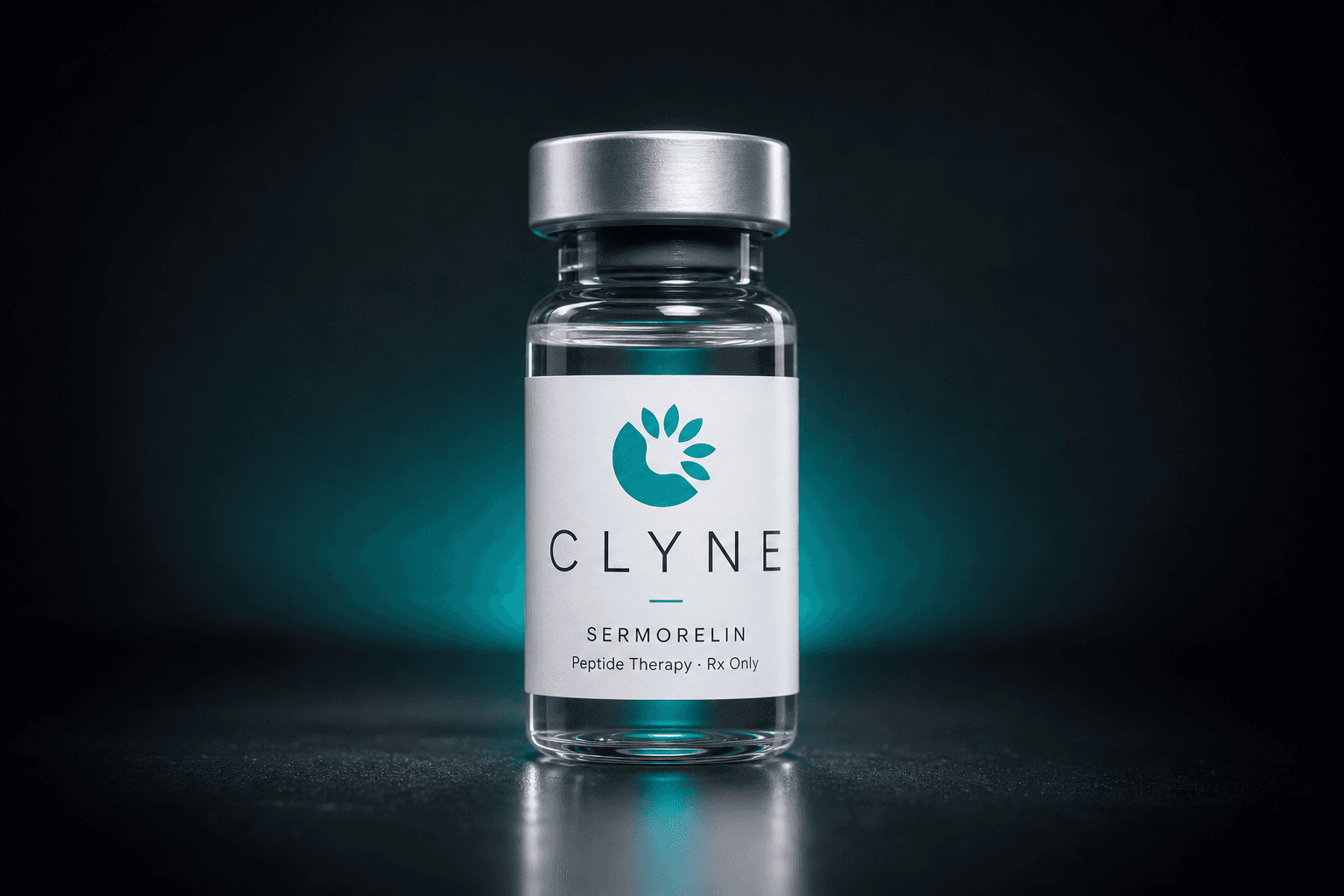
- Routesubcutaneous injection
- Baseline labsTypically required
- EvidenceLimited human data
- AvailabilityAvailable with Rx
How it works
Sermorelin is a growth-hormone-releasing hormone (GHRH) analog — specifically, it corresponds to the first 29 amino acids of natural GHRH, the fragment that carries the molecule's signaling activity. Instead of replacing growth hormone the way injected GH does, it acts upstream: it binds GHRH receptors on the pituitary gland and prompts the pituitary to release the body's own growth hormone in its natural, pulsatile rhythm.
That upstream position is the conceptual appeal often cited for sermorelin. Because the pituitary still sits in the middle, the body's own feedback loops (including the brake hormone somatostatin) remain in the circuit, rather than being bypassed entirely. It's a meaningfully different approach from administering growth hormone directly — though 'different mechanism' is not the same as 'proven better outcomes,' and the human evidence in healthy adults remains limited.
What it's been studied for
- Effects on the body's own growth-hormone axis and IGF-1 signaling
- Age-related decline of GH secretion (largely a research context)
- Markers associated with body composition, sleep, and recovery
“Studied for” describes what research has examined — not a promise of any outcome for you.
What the evidence says
Human data for this peptide is limited. A licensed provider can discuss what the current evidence does and does not support for you.
What to expect at Clyne®
Sermorelin is prescription-only and, as a compounded preparation, is not FDA-approved. Before prescribing, a provider typically reviews your intake and may order baseline labs — often including IGF-1 — to establish a starting point and confirm it's reasonable for you.
If you're prescribed it, your provider directs the route and schedule and may order follow-up labs to guide care over time. Your care team stays available for questions, side-effect concerns, and adjustments.
Safety & considerations
Sermorelin isn't appropriate for everyone. Your provider screens for conditions and medications that make GHRH-axis therapy a poor idea, and can decline if it isn't right for you. Be sure to disclose any personal or family history of cancer, as well as thyroid, blood-sugar, or other endocrine conditions, because they bear directly on this decision.
Reported effects tend to be mild — things like injection-site reactions or transient flushing — but the honest summary is that long-term data in healthy adults is thin. That uncertainty is exactly why this is a supervised, lab-guided therapy rather than something to self-direct.
Regulatory status
This peptide may be compounded by a licensed pharmacy under a patient-specific prescription. Compounded medications are not FDA-approved. A regulatory category that permits compounding is not the same as FDA approval.
Common questions
Is sermorelin the same as growth hormone?
No. Sermorelin is a GHRH analog that prompts your pituitary to release its own growth hormone. Injected growth hormone replaces the hormone directly and bypasses that step. They're related but mechanistically distinct.
Why might I need labs?
Because sermorelin acts on the growth-hormone axis, a provider may check markers like IGF-1 at baseline and again on follow-up to confirm it's appropriate and to monitor your response over time.
Is it FDA-approved?
The compounded sermorelin offered here is not FDA-approved. Compounded medications are prepared by a licensed pharmacy and are not reviewed by the FDA for safety or effectiveness.