GHK-Cu
GHK-Cu is a copper-binding peptide. Not currently available; cosmetic topical vs compounded injectable are distinct.
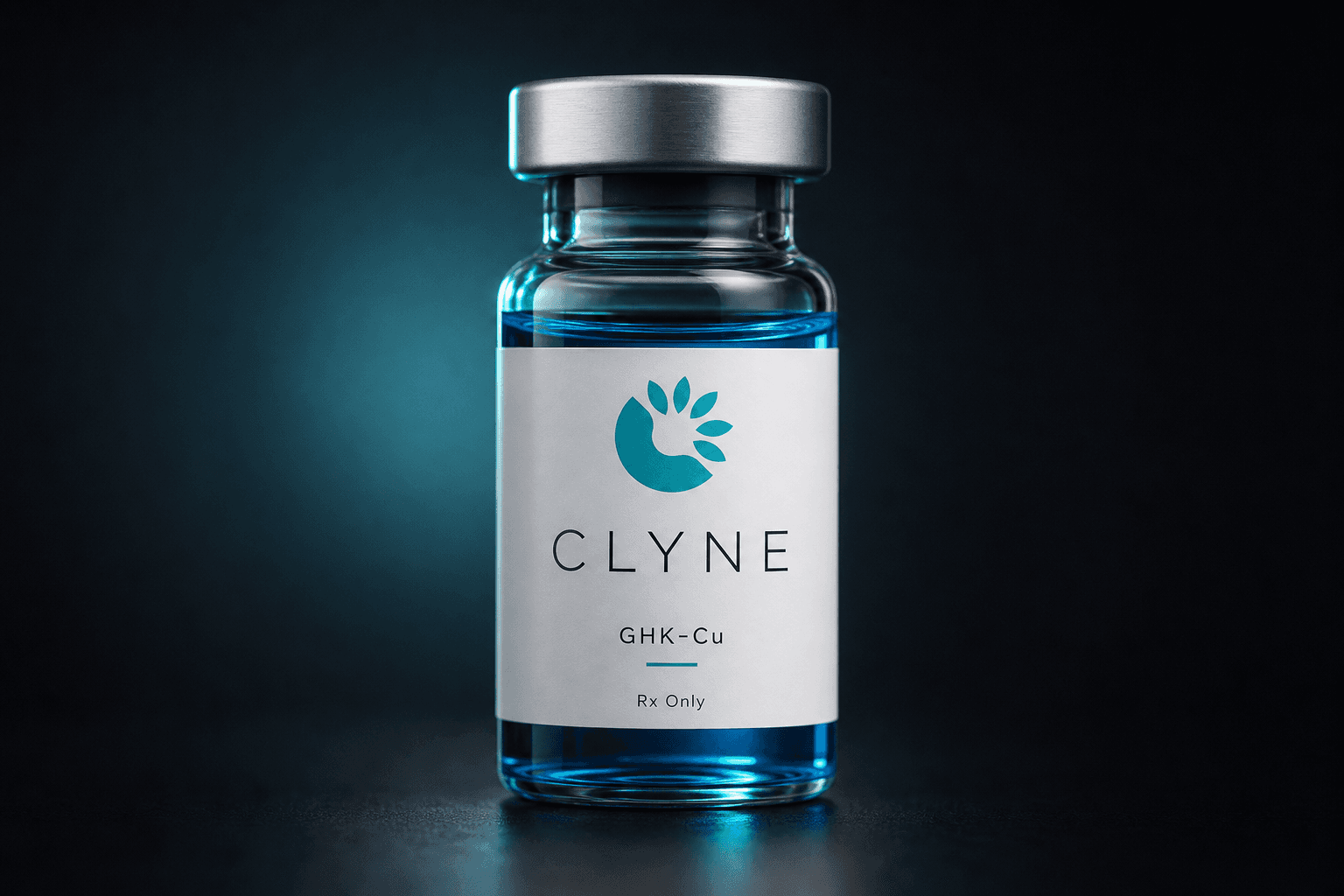
- Routesubcutaneous injection
- Baseline labsNot typically required
- EvidenceLimited human data
- AvailabilityEducation only
How it works
GHK-Cu is a copper-binding tripeptide (glycyl-L-histidyl-L-lysine bound to a copper ion) that occurs naturally in human plasma, saliva, and other tissues, with levels that decline with age. It's one of the most studied 'copper peptides' in skin science, where — applied topically — it's been examined for roles in collagen-related signaling, antioxidant activity, and the orchestration of skin-remodeling processes.
The essential distinction to hold onto: most of the GHK-Cu evidence comes from topical and cosmetic use, and the over-the-counter copper-peptide serum in your bathroom is a fundamentally different product from a compounded injectable. Mechanistic interest in the molecule does not automatically transfer across that gap, and we keep the two contexts clearly separated.
What it's been studied for
- Skin and connective-tissue remodeling (largely topical/cosmetic research)
- Copper-peptide signaling and antioxidant pathways
“Studied for” describes what research has examined — not a promise of any outcome for you.
What the evidence says
Human data for this peptide is limited. A licensed provider can discuss what the current evidence does and does not support for you.
What to expect at Clyne®
The injectable form is not currently available to prescribe and is presented here for education. A cosmetic topical product is a different thing from a compounded injectable, and we don't blur that line.
If you're interested, the waitlist is the appropriate next step, and a provider is the right person to discuss the difference between the topical evidence and any injectable use.
Safety & considerations
Don't assume that cosmetic-topical evidence transfers to injectable use — the dose, exposure, and safety questions are entirely different. A provider can explain the distinction and the limits of the current data.
Topical copper peptides are widely available as cosmetics; an injectable is a medical product with a different evidence and regulatory picture, and far less human data behind it.
Regulatory status
This peptide may be compounded by a licensed pharmacy under a patient-specific prescription. Compounded medications are not FDA-approved. A regulatory category that permits compounding is not the same as FDA approval.
Common questions
Isn't GHK-Cu already in my skincare?
Topical GHK-Cu is common in cosmetic serums. That's separate from a compounded injectable, which has a different evidence base, exposure profile, and regulatory status.
Is the injectable available?
Not currently — it's education-only here. The topical/cosmetic version being common doesn't make the injectable an approved or available medical product.
Join the waitlist
GHK-Cu isn't currently available. Add your email and we'll notify you if its status changes — no charge, no commitment.